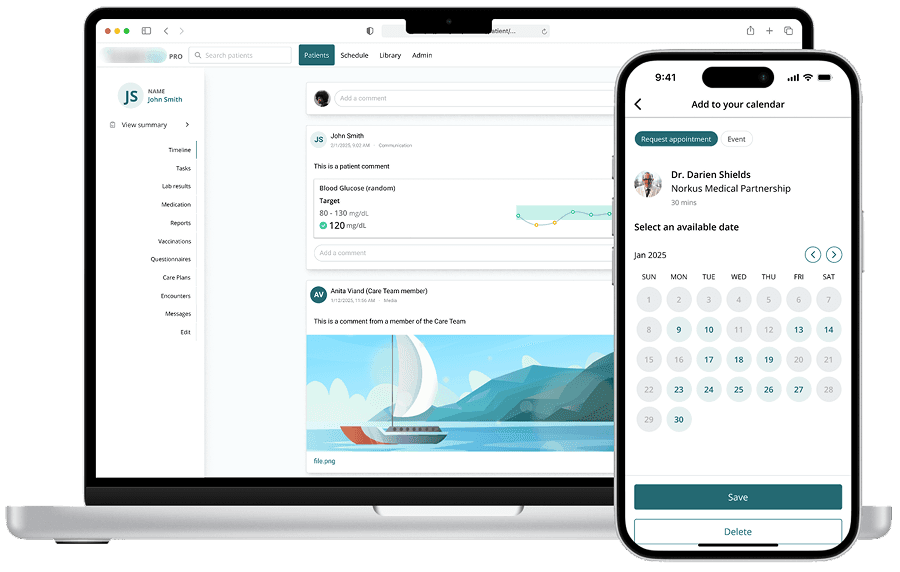
Defined role-based access, shared care planning logic, and scalable provider–patient workflows to future-proof platform integration.
Project scope
Role
UX Lead
Timeline
2025
Team
CEO, CTO, Product, Engineers,
Status
Designed and validated; implementation in backlog
Context
As my client expanded its PHR capabilities, providers required structured access to patient data, shared care plans, and clinical documentation tools. The existing platform was built solely for patient-facing interaction, without governance or permission architecture.
Problems
No role-based access model
No shared goal/task logic between patient and provider
No structured CarePlan framework
Risk of duplicating logic across interfaces
Regulatory and governance considerations
Need for scalable integration with larger health systems
Designing for shared ownership without losing control
Define roles before designing screens
Access logic and permissions were mapped before interface exploration.
Build shared logic, not parallel systems
Goals and tasks were structured as shared entities across patient and provider environments.
Separate data visibility from data ownership
Patients retained visibility and agency while providers operated within scoped permissions.
Design for integration readiness
CarePlan structures aligned with standardized health data models to enable future interoperability.
Role-based access architecture
A role matrix was defined to map permissions across patient, provider, and administrative roles. Access was scoped by data type, action, and ownership.
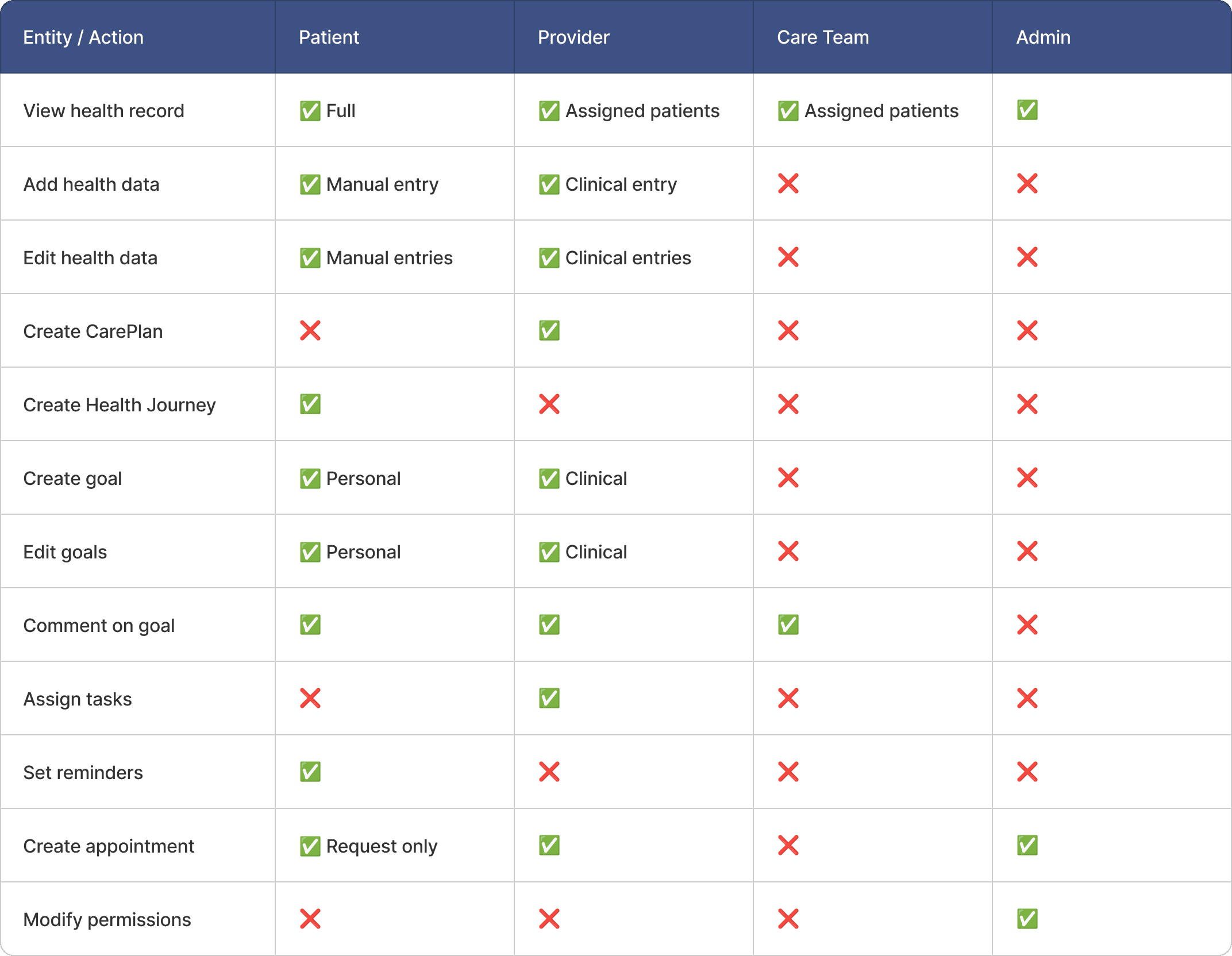
Administrative functions (practice management, billing, and provider onboarding) were scoped separately under system-level roles and excluded from patient-facing governance.
Shared CarePlan infrastructure
CarePlans were structured around goals and tasks as shared objects. Providers could define goals; patients could track, update, and comment within controlled boundaries.
As clinical objects, the CarePlan object was created by the provider from templates or prompting the AI agent trained specifically to build CarePlans.
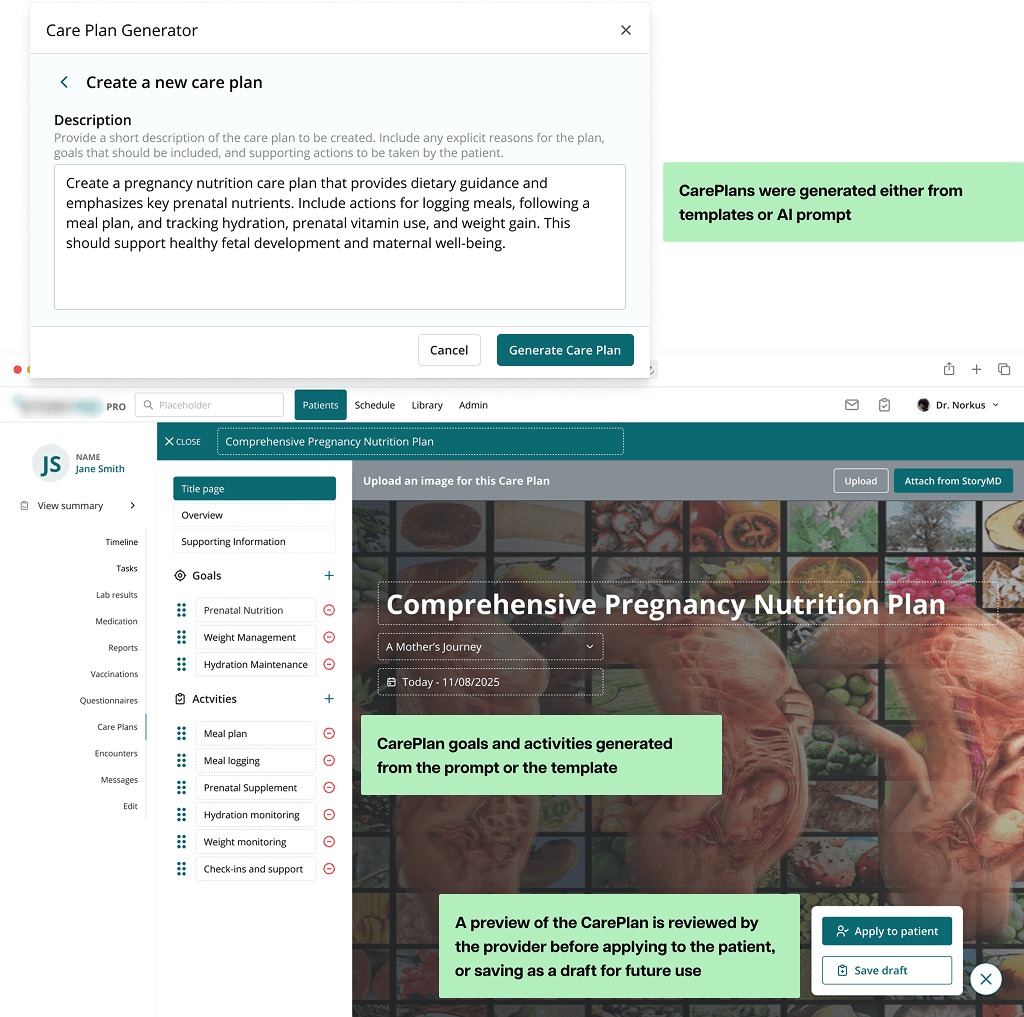
Visual CarePlan generator with AI agent
Provider-side data review and risk surfacing
The provider portal leveraged the same structured data layer as the patient PHR, with AI-assisted trend highlighting and filtered review states. Indicators of goal status were based on FHIR goal objects and utilised the same colour coding as patient biomarker data for quick scanning.
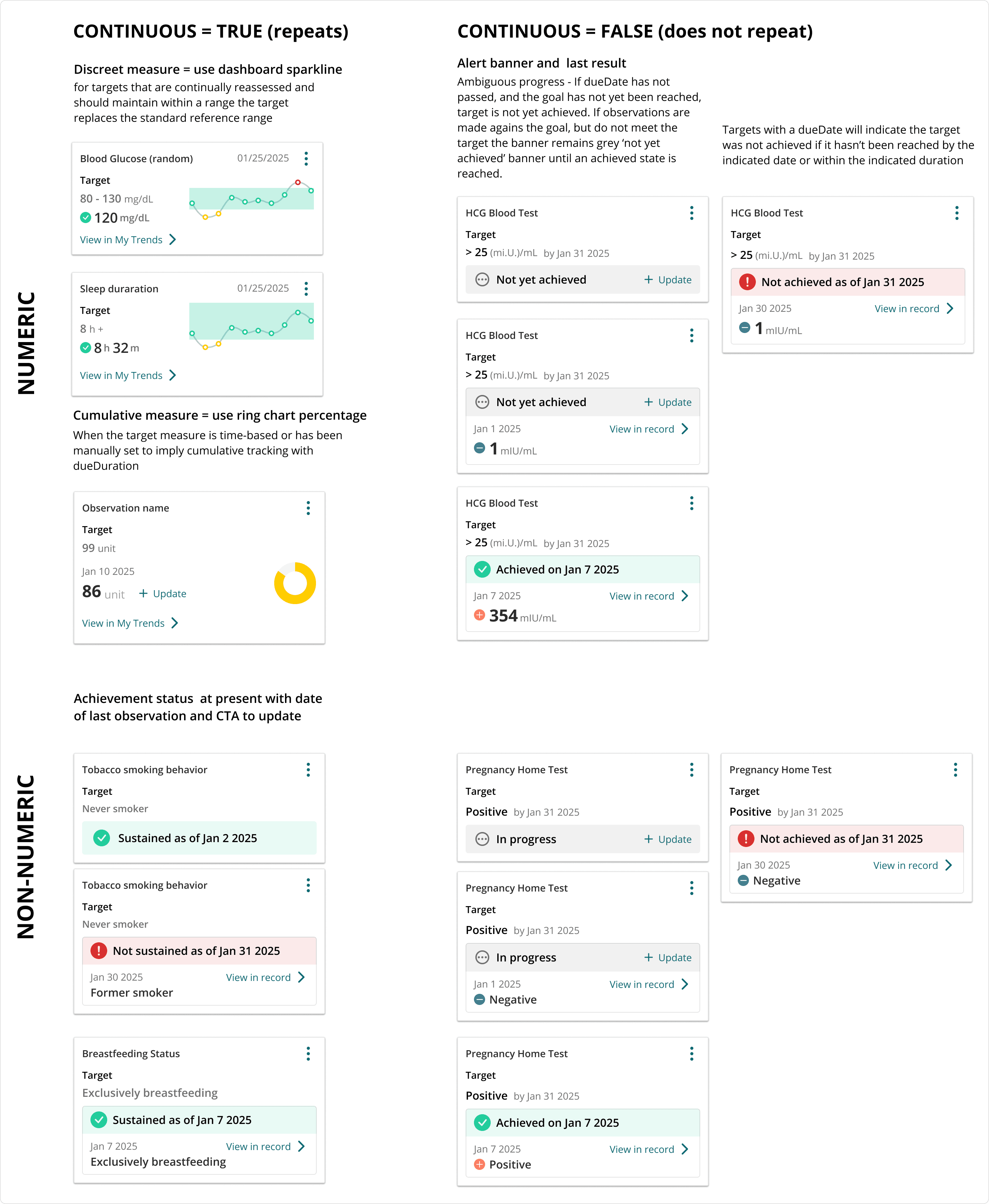
Matrix of goal status indicators
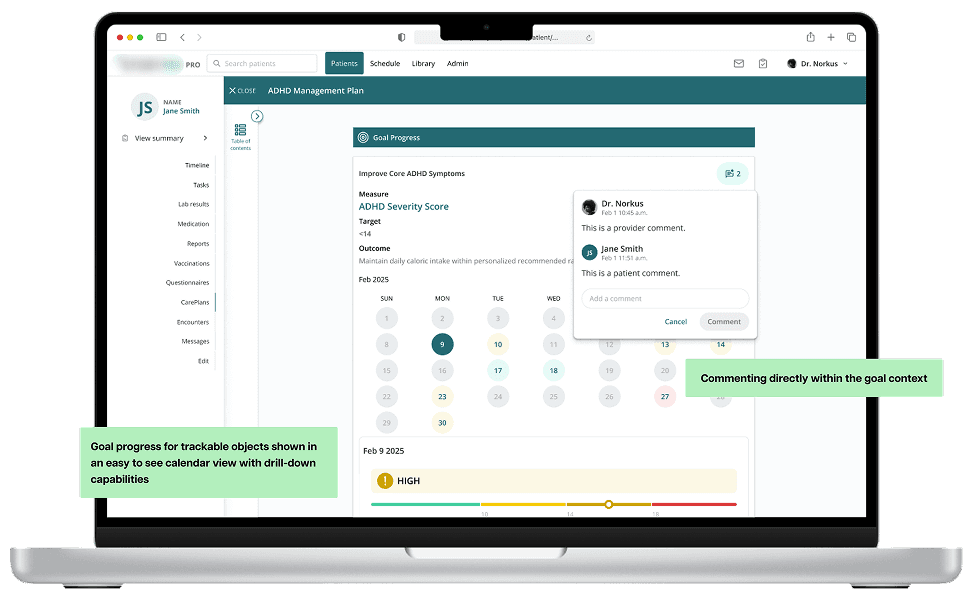
Structured communication within shared context
Communication between provider and patient was embedded within goals and tasks rather than isolated messaging threads, preserving context and traceability.
Implementation status
Core PHR logic supports shared entities; full provider interface remains in backlog pending strategic direction.
Designed and validated
Role-based access matrix
CarePlan builder architecture
Shared goal/task model
Provider data review workflows
Outcomes
Established scalable permission architecture
Prevented duplication of patient/provider logic
Created interoperability-ready CarePlan framework
Defined governance standards for future integration
Reflection
Designing this system required thinking beyond immediate UI needs and toward long-term platform integrity. By structuring roles, permissions, and shared logic early, the foundation was set for scalable multi-sided growth.